
Do You Really Need a Skid Steer for Small Property Work?
Short Answer
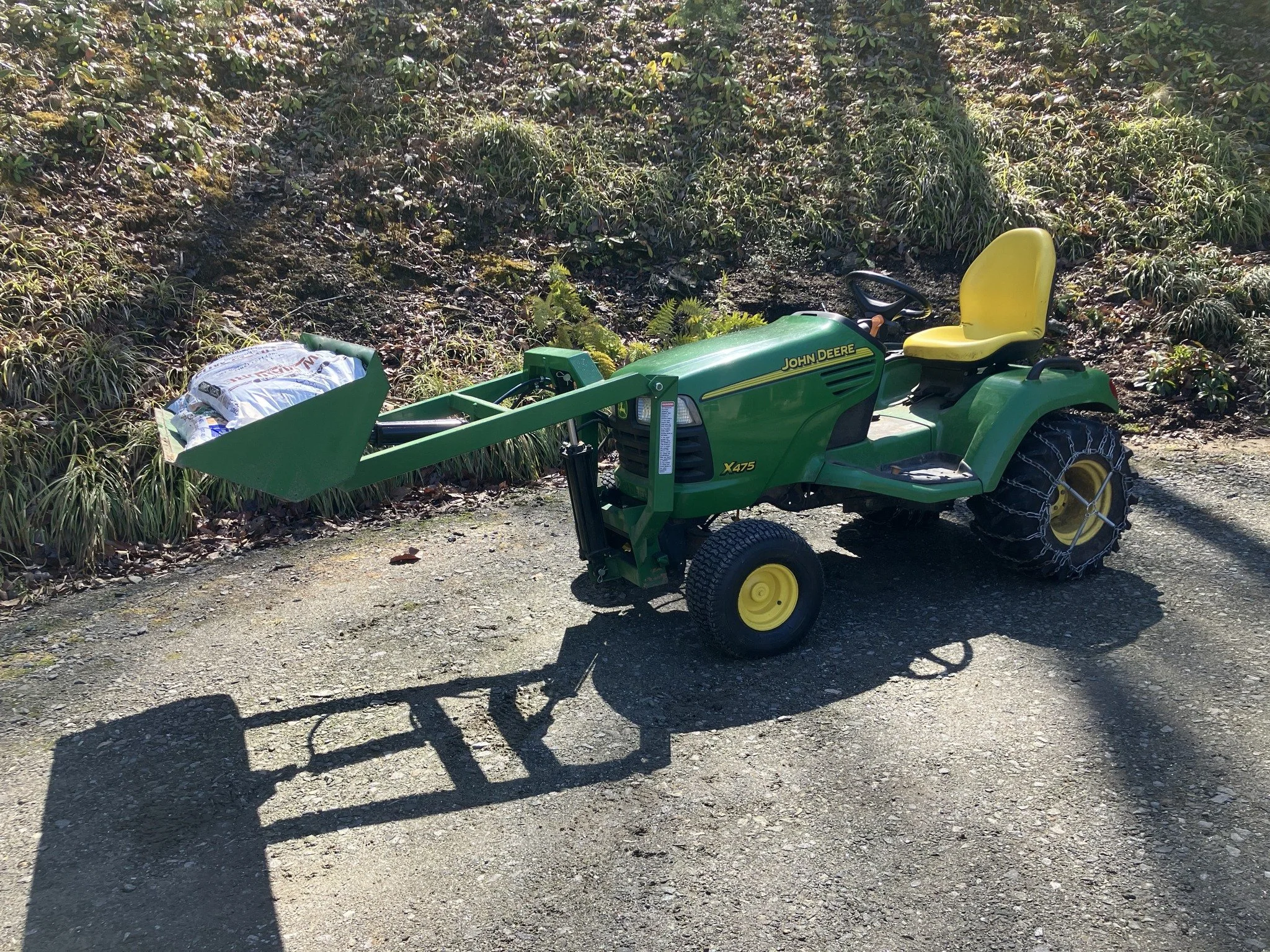
If you’re doing heavy commercial work, a skid steer is the right tool. But for most property owners, a garden tractor, especially one equipped with a hydraulic front-end loader, can handle the majority of tasks at a fraction of the cost and complexity.
The key isn’t choosing the biggest machine.
It’s choosing the right level of capability for the work you actually do.
Why This Decision Matters More Than You Think
A lot of people jump straight to comparing machines:
Skid steer vs tractor
Bigger vs smaller
But that’s not really the right question.
The real question is:
“How much lifting, moving, and material handling capability do I actually need, and what’s the most efficient way to get it?”
Because that’s where the cost difference (and overbuying) happens.
What a Skid Steer Actually Gives You
A skid steer is built for:
High lift capacity
Fast cycle times
Continuous, heavy-duty use
If you're:
Running a landscaping business
Moving pallets daily
Doing excavation or grading work
…it’s hard to beat.
But here’s the tradeoff most people underestimate:
$25,000–$60,000+ investment
Requires trailer + transport
Heavy on lawns and finished surfaces
Often underutilized on residential properties
For many homeowners, a skid steer spends more time sitting than working.
What a Garden Tractor Can Do (With the Right Setup)
On its own, a garden tractor from brands like John Deere or Kubota is typically used for:
Mowing
Towing
Light property maintenance
But the moment you add true hydraulic lifting capability, everything changes.
Now your tractor can:
Scoop and move gravel
Load and spread mulch
Clear snow
Lift and transport heavy materials
At that point, you’re no longer comparing “tractor vs skid steer.”
You’re comparing, two different ways to achieve material-handling capability.
The Critical Difference Most Buyers Miss: Hydraulics vs Actuators
This is where a lot of confusion happens.
Some loader systems use electric actuators
These are often marketed as:
Compatible with almost any tractor
Easy to install
But they come with tradeoffs:
Slower lift speeds
Reduced lifting capacity
Limited lift height
Less responsiveness under load
Hydraulic systems (like those used on larger equipment)
These rely on your tractor’s onboard hydraulic system and require:
Four quick-connect hydraulic outlets
That requirement limits compatibility, but it enables:
Faster cycle times
Greater lifting power
Smoother, more precise control
Real-world performance closer to a skid steer
Why This Tradeoff Matters in Real Work
Let’s take a simple example:
Moving gravel for a driveway project
With an actuator-driven system:
Slower lift → longer cycle times
Lower capacity → more trips
More total time on task
With a hydraulic system:
Faster lift and dump
Larger loads per trip
Significantly less total time
Over the course of a project, that difference compounds quickly.
So Which Should You Choose?
A skid steer makes sense if you:
Run commercial jobs
Need maximum lifting power
Work daily in heavy-duty conditions
A tractor + hydraulic loader makes sense if you:
Own 1–10 acres
Maintain your own property
Move material regularly (but not commercially)
Want serious capability without buying another machine
An actuator-based system might make sense if you:
Have a tractor without hydraulic outlets
Only need occasional, light-duty use
Prioritize compatibility over performance
The Smarter Way to Think About This
Instead of asking:
“Should I buy a skid steer?”
Ask:
“What’s the most efficient way to get the capability I need?”
For many property owners, the answer is:
Not a bigger machine
But a smarter upgrade
Where a System Like Little Buck Loader Fits
For tractors that support hydraulic connections (four quick-connect outlets), systems like Little Buck Loader are designed to:
Deliver true hydraulic performance
Expand what your tractor can realistically handle
Bridge the gap between basic property equipment and compact construction machinery
This approach doesn’t try to replace a skid steer, it gives you just enough of that capability to get the job done efficiently.
The Bottom Line
A skid steer is a powerful tool, but it’s not always the right one.
If your work is:
Occasional but meaningful
Focused on your own property
Centered around moving materials
Then upgrading a capable tractor may give you everything you need, without the cost, size, and complexity of a second machine.
If you own a John Deere or Kubota tractor with hydraulic outlets, take a closer look at what a Little Buck Loader can do. You may already have the machine, you just need to unlock its full capability.